OVARIAN CANCER and US

Blog Archives: Nov 2004 - present

#ovariancancers


Special items: Ovarian Cancer and Us blog best viewed in Firefox

Search This Blog

Thursday, May 05, 2016

Familial adrenocortical carcinoma in association with Lynch syndrome


 adrenocortical carcinoma
 http://www.cancer.gov/images/cdr/live/CDR739009-750.jpg


open access
 

Case:
 A 54-year-old female, with a history of ovarian and colorectal malignancy, was found to have an ACC. A detailed family history revealed her mother had died of ACC and her sister had previously been diagnosed with endometrial and colorectal cancers. A unifying diagnosis of Lynch syndrome was considered, and immunohistochemical analyses demonstrated loss of MSH2 and MSH6 expression in both adrenocortical carcinomas (proband and her mother), and in the endometrial carcinoma of her sister. Subsequent genetic screening confirmed the presence of a germline MSH2 mutation (resulting in deletions of exons 1–3) in the proband and her sister.

Conclusion:
Our findings provide strong support for the recent proposal that ACC should be considered a Lynch syndrome associated tumour and included in the Amsterdam II clinical diagnostic criteria. We also suggest that screening for ACC should be considered in cancer surveillance strategies directed at individuals with germline mutations in DNA mismatch repair genes.


In summary, we report the first description of familial ACC in conjunction with a germline MSH2 mutation and provide support for MMR genes as candidates in hereditary ACC. We advocate ACC be now included in clinical diagnostic criteria for LS and considered in cancer surveillance strategies for individuals with germline mutations in DNA MMR genes. Moreover, in the absence of clinical management guidelines for ACC surveillance in patients with inherited cancer syndromes, including LS, we recommend individualized screening protocols coupled with ongoing clinical vigilance.

Consumption of whole grains and cereal fiber in relation to cancer risk: a systematic review of longitudinal studies


abstract
Consumption of whole grains and cereal fiber in relation to cancer risk: a systematic review of longitudinal studies
 Published by Oxford University Press on behalf of the International Life Sciences Institute

Context: Evidence from previous reviews is supportive of the hypothesis that whole grains may protect against various cancers. However, the reviews did not report risk estimates for both whole grains and cereal fiber and only case–control studies were evaluated. It is unclear whether longitudinal studies support this conclusion. Objective: To evaluate associations between whole grains and cereal fiber in relation to risk of lifestyle-related cancers data from longitudinal studies was evaluated.  
Data Sources: The following 3 databases were systematically searched: PubMed, EMBASE, and Cochrane CENTRAL. 
Study Selection: A total of 43 longitudinal studies conducted in Europe and North America that reported multivariable-adjusted risk estimates for whole grains (n = 14), cereal fiber (n = 23), or both (n = 6) in relation to lifestyle-related cancers were included.  
Data Extraction: Information on study location, cohort name, follow-up duration, sample characteristics, dietary assessment method, risk estimates, and confounders was extracted.  
Data Synthesis: Of 20 studies examining whole grains and cancer, 6 studies reported a statistically significant 6%–47% reduction in risk, but 14 studies showed no association. Of 29 studies examining cereal fiber intake in relation to cancer, 8 showed a statistically significant 6%–49% reduction in risk, whereas 21 studies reported no association.  
Conclusions: This systematic review concludes that most studies were suggestive of a null association. Whole grains and cereal fiber may protect against gastrointestinal cancers, but these findings require confirmation in additional studies.
  • cancer risk
  • cereal fiber
  • longitudinal studies
  • systematic revi

Google Trends - Web Search interest: brca - Worldwide, 2004 - present


Google Trends 

Google Trends - Web Search interest: lynch syndrome - Worldwide, 2004 - present


Google Trends


Google Trends - Web Search interest: ovarian cancer - Worldwide, 2004 - present


Google Trends 


2016 Pancreatic Neoplasms, An Issue of Surgical Oncology Clinics of North America (history, genetics etc..)


open access Google Books

Wednesday, May 04, 2016

2016 (free online book) Ovarian Cancers: Evolving Paradigms in Research and Care (2016)


Blogger's Note: in order to download this book you need to sign in as a guest 


Download as a guest

While logged in as a guest, you can download any of the free PDFs on NAP.edu. You'll remain logged in until you close your browser.

The National Academies Press


Ovarian Cancers:

Evolving Paradigms in Research and Care (2016)


The following files are available for free download. For more information about downloading files, please see the File Download FAQ

“Googling” for Cancer: Infodemiological Assessment of Online Search Interests-Australia, Canada, NZ, UK, US


1) abstract: “Googling” for Cancer: An Infodemiological Assessment of Online Search Interests in Australia, Canada, New Zealand, the United Kingdom, and the United States | Foroughi | JMIR Cancer

2) open access (full text/pdf)
 Journal of Medical Internet Research

Department of Pathology
School of Medicine
Shahid Beheshti University of Medical Sciences
Taleghani Hospital, Tabnak St., Velenjak Region, Chamran Highway
Tehran, 1985711151
Islamic Republic Of Iran

ABSTRACT

Background: The infodemiological analysis of queries from search engines to shed light on the status of various noncommunicable diseases has gained increasing popularity in recent years.
Objective: The aim of the study was to determine the international perspective on the distribution of information seeking in Google regarding “cancer” in major English-speaking countries.
Methods: We used Google Trends service to assess people’s interest in searching about “Cancer” classified as “Disease,” from January 2004 to December 2015 in Australia, Canada, New Zealand, the United Kingdom, and the United States. Then, we evaluated top cities and their relative search volumes (SVs) and country-specific “Top searches” and “Rising searches.” We also evaluated the cross-country correlations of SVs for cancer, as well as rank correlations of SVs from 2010 to 2014 with the incidence of cancer in 2012 in the above mentioned countries.
Results: From 2004 to 2015, the United States (relative SV [from 100]: 63), Canada (62), and Australia (61) were the top countries searching for cancer in Google, followed by New Zealand (54) and the United Kingdom (48). There was a consistent seasonality pattern in searching for cancer in the United States, Canada, Australia, and New Zealand. Baltimore (United States), St John’s (Canada), Sydney (Australia), Otaika (New Zealand), and Saint Albans (United Kingdom) had the highest search interest in their corresponding countries. “Breast cancer” was the cancer entity that consistently appeared high in the list of top searches in all 5 countries. The “Rising searches” were “pancreatic cancer” in Canada and “ovarian cancer” in New Zealand. Cross-correlation of SVs was strong between the United States, Canada, and Australia (>.70, P<.01).
Conclusions: Cancer maintained its popularity as a search term for people in the United States, Canada, and Australia, comparably higher than New Zealand and the United Kingdom. The increased interest in searching for keywords related to cancer shows the possible effectiveness of awareness campaigns in increasing societal demand for health information on the Web, to be met in community-wide communication or awareness interventions.

JMIR Cancer 2016;2(1):e5

doi:10.2196/cancer.5212

Let’s Not Compromise on the Need to Strengthen Preclinical Research


Markman (Opinion)

"Silent" Portal Vein Thrombosis, A Dangerous Side Effect From Cancer


Cure Today article

Patient-reported outcomes (PRO) in ovarian cancer clinical trials—lost opportunities and lessons learned


open access

 Despite increased recognition of the value of including patient-reported outcomes (PROs) as important end points in phase III clinical trials, there has been a lack of pre-specified PRO hypotheses and shortcomings with the analyses and interpretation of PROs in many ovarian cancer trials. This paper discusses and provides examples of the so-called lost opportunities in ovarian cancer trials.
 In ovarian cancer clinical trials, the diagnosis of progression is based on standardised RECISTv1.1/GCIG CA125 criteria, which then determine whether the patient remains on treatment or comes off the trial. It is unclear how many patients diagnosed with ‘progressive disease’ have any symptoms that could be attributed to progression, as this information is seldom, if ever, reported.
 It is beyond the scope of this paper to discuss all the problems and vagaries of RECIST v1.1. The assumption underlying RECIST is that tumour measurements can be reliably carried out by different readers and are accurate and reproducible. However, this is open to question [2, 3]. The reliability and reproducibility of RECIST v1.1 in ovarian cancer is unknown. Furthermore, recurrent ovarian cancers can be very difficult to ‘measure’ on a computed tomography scan. It has been estimated that over 50% of patients with recurrent disease do not have measureable disease using RECIST criteria [4]. We are entering a new era in which many patients with ovarian cancer will be treated with targeted therapies and immune checkpoint inhibitors which are quite different from cytotoxic chemotherapy and this raises questions regarding the value of using RECIST to measure benefit with other treatment modalities. These problems with RECIST v1.1 and the somewhat arbitrary definitions of progression underscore the importance of including patient-reported outcomes (PROs) as end points in clinical trials.
 conclusion

There is increasing recognition regarding the potential importance of including PROs (patient reported outcomes) in ovarian cancer clinical trials. The Society of Gynecologic Oncology (SGO) white paper on clinical trial end points concluded that end point selection in ovarian cancer clinical trials should reflect the impact on disease burden and unique characteristics of the treatment cohort while reflecting true patient benefit [26, 27]. The 4th Gynaecologic Cancer Intergroup (GCIG) consensus meeting also recognised the importance of HRQOL in all clinical trials and concluded that clinical trials in patients with platinum-resistant/refractory ovarian cancer should at the very least measure the impact of treatment on HRQOL and symptom benefit. Ideally, these should be used as co-primary end points with traditional end points such as PFS and OS [26, 28]. For this to be made possible, regulatory bodies must follow the lead of ESMO and MCBS and recognise that there are other meaningful ways to measure treatment benefit apart from the impact on PFS or OS. We could have learned much more from previous ovarian cancer trials if there had been closer attention to PRO hypotheses and the inclusion of appropriate PRO end points when designing the clinical trials. Ongoing initiatives promoting the value and importance of high-quality PRO data in clinical trials will hopefully turn the tide and bring about change.

open access: Prioritizing Variants in Complete Hereditary Breast and Ovarian Cancer Genes in Patients Lacking Known BRCA Mutations


Prioritizing Variants in Complete Hereditary Breast and Ovarian Cancer Genes in Patients Lacking Known BRCA Mutations - Caminsky - 2016 - Human Mutation

Introduction

Currently, the lifetime risk for a woman to develop breast cancer (BC) is 12.3% and 1.3% in the case of ovarian cancer (OC [Howlander et al., 2014]). Approximately 5–10% of all BC cases are hereditary in nature, versus 25% for OC, where relative risk (RR) of BC or OC with one affected first degree family member is estimated at 2.1 and 3.1, respectively [Stratton et al., 1998; Walsh et al., 2011]. Two highly penetrant genes, BRCA1 and BRCA2, are associated with a large proportion of hereditary breast and ovarian cancer (HBOC) cases. However, the estimated rate of linkage to these genes is significantly higher than the proportion of pathogenic mutations identified in HBOC families [Ford et al., 1998], suggesting unrecognized or unidentified variants in BRCA1/2.
Clinical BRCA1/2 testing is restricted primarily to coding regions. Limitations on how variants can be interpreted, lack of functional validation, and mutations in other genes contribute to uninformative results. The heritability that is not associated with BRCA genes is likely due to other genetic factors rather than environmental causes, specifically moderate- and low-risk susceptibility genes [Antoniou and Easton, 2006]. Hollestelle et al. [2010] point out the challenges in estimating increased risks associated with mutations in these genes, as the disease patterns are often incompletely penetrant, and require large pedigree studies to confidently assess pathogenicity.
Next-generation sequencing (NGS) of gene panels for large cohorts of affected and unaffected individuals has become an increasingly popular approach to confront these challenges. Numerous HBOC gene variants have been catalogued, including cases in which RR (risk ratio) has been determined; however, the literature is also flooded with variants lacking a clinical interpretation [Cassa et al., 2012]. It is not feasible to functionally evaluate the effects all of the variant(s) of uncertain significance (VUS) identified by NGS. Further, in silico assessment of protein coding variants has not been entirely reliable [Rogan and Zou, 2013; Vihinen, 2013]. Several approaches have been developed to better assess variants from exome and genome-wide NGS data [Duzkale et al., 2013; Kircher et al., 2014]. Nevertheless, there is an unmet need for other methods that quickly and accurately bridge variant identification and classification.
To begin to address this problem, we sought to provide potentially novel interpretations of noncoding sequence changes, based on disruption or acquisition of interactions with proteins that recognize nucleic acid binding sites. Information theory (IT) based analysis predicts changes in sequence binding affinity, and it has been applied and validated for use in the analysis of splice sites (SSs),......

 In the present study, we have sequenced 13 additional genes that have been deemed HBOC susceptibility loci (BARD1, EPCAM, MLH1, MRE11A, MSH2, MSH6, MUTYH, NBN, PMS2, PTEN, RAD51B, STK11, and XRCC2 [Minion et al., 2015]). These genes encode proteins with roles in DNA repair, surveillance, and cell cycle regulation (Fig. 1; for further evidence supporting this gene set see Supp. Table S1 [Apostolou and Fostira, 2013; Al Bakir and Gabra, 2014]), and are associated with specific disease syndromes that confer an increased risk of BC and OC, as well as many other types of cancer (Supp. Table S2). High-risk genes confer >4 times increased risk of BC compared to the general population. BRCA1 and BRCA2 are estimated to increase risk 20-fold [Antoniou et al., 2003]....
 Figure 1. (below) Common genomic pathways among 20 HBOC genes, including risk and relevant literature. The left, top, and right circles indicate sequenced genes that play important roles in the mismatch repair (MMR), Fanconi anemia, and DNA double-strand break repair pathways, respectively. The bottom circle contains genes involved in cell cycle control. Genes considered to present a high risk of breast and/or ovarian cancer when mutated are bolded, moderate-risk genes are underlined, and low-risk genes are in normal font. The estimated number of articles listing a gene's association with breast or ovarian cancer (based on a systematic search in PubMed [performed June 2015]) is indicated in superscript. **MUTYH is only high risk in the case of bi-allelic mutations. *EPCAM is not involved in any pathways, but is associated with hereditary nonpolyposis colorectal cancer (HNPCC) by virtue of the fact that 3′ deletions of EPCAM can cause epigenetic silencing of MSH2, causing Lynch syndrome protein. See Supp. Table S1 for citations and further evidence supporting this gene set.

http://onlinelibrary.wiley.com/store/10.1002/humu.22972/asset/image_n/humu22972-fig-0001.png?v=1&t=int7dfs7&s=940c490e375aa8125177da5dcfffc148ee35e55e

Ontario healthcare: New gene testing technology finds cancer risks 'hiding in plain sight'


Medical News 

Adapted Media Release
Published:

A research team led by an award-winning genomicist at Western University has developed a new method for identifying mutations and prioritizing variants in breast and ovarian cancer genes, which will not only reduce the number of possible variants for doctors to investigate, but also increase the number of patients that are properly diagnosed.
These potentially game-changing technologies, developed by Peter Rogan, PhD, students and his collaborators from Western's Schulich School of Medicine & Dentistry, reveal gene variants that were missed by conventional genetic testing.
Their method, described in BMC Medical Genomics, was first applied to 102 individuals at risk or with a diagnosis of inherited breast cancer. The team also studied 287 women with no known mutations for an article published in Human Mutation.
Rogan, Canada Research Chair in Genome Bioinformatics, says that 16 to 20 per cent of women in southwestern Ontario, who have their BRCA genes tested for breast and/or ovarian cancer risk, carry disease-causing gene variants that are well-understood by clinicians and genetic counselors. If a patient tests positive for an abnormal BRCA1 or BRCA2 gene and have never had breast cancer, there is a much higher-than-average risk of developing the deadly disease.
Basically, this means that doctors can make a decision on whether or not to proceed with specific treatments and can provide definitive genetic counseling for their children and other relatives.
The most widely known example of this type of patient is acclaimed actress, filmmaker and humanitarian Angelina Jolie. Testing indicated that Jolie had a gene variant associated with very aggressive form of this cancer, so she opted for a double mastectomy.
However, for the remaining 80-84 per cent of women who have been tested, the test, which is covered by health insurance in Ontario, does not give the patient and doctor a clear indication of how to proceed.
This is due to the fact that there is no current standard agreement of how to diagnose patients, who carry gene variants of uncertain significance. Rogan's BMC Medical Genomics study of 102 individuals identified 15,311 variants in seven complete genes. After completing the analysis, between 0 and 3 variants were prioritized in most patients.
"When a woman with a family history of breast cancer sees her physician, they want to know if they have a mutation in breast/ovarian cancer genes," says Rogan. "All of the patients that we studied had been sequenced for BRCA1 or BRCA2. The causative cancer gene variants are hiding in plain sight in these and other cancer genes, but the original testing laboratory didn't recognize them. Our approach can reveal gene variants that might explain their increased risk for cancer."
To increase the number of women who will benefit from genetic testing for breast cancer, Rogan says doctors and government policy makers should include additional genes in testing and consider new approaches that can interpret complete gene sequences.

A unified analytic framework for prioritization of non-coding variants of uncertain significance in heritable breast and ovarian cancer. Eliseos J. Mucaki, Natasha G. Caminsky, Ami M. Perri, Ruipeng Lu, Alain Laederach, Matthew Halvorsen, Joan H. M. Knoll and Peter K. Rogan. BMC Medical Genomics. DOI:10.1186/s12920-016-0178-5. Published online 11 April 2016.

Prioritizing Variants in Complete Hereditary Breast and Ovarian Cancer Genes in Patients Lacking Known BRCA Mutations. Natasha G. Caminsky, Eliseos J. Mucaki, Ami M. Perri, Ruipeng Lu, Joen H. M. Knoll, Peter K. Rogan. Human Mutation. DOI:10.1002/humu.22972. Published online 18 March 2016.

Journal flags duplicated text by gynecologic cancer researcher with 13 retractions


Retraction Watch

Tracking retractions as a window into the scientific process


When journals discover duplicated material, many choose to retract — but a cancer journal recently faced with the same dilemma involving a researcher with multiple retractions under his belt has instead decided to flag the paper with an expression of concern.

An editor told us that Cancers considered retracting the paper, by gynecologic cancer researcher Noriyuki Takai, but decided not to because the paper
contains some novel content that is of interest to the scientific community.
Epigenetic Therapy in Human Choriocarcinoma,” published in 2010, has been cited once, according to Thomson Reuters Web of Science, and self-plagiarizes from other publications by Takai and his co-author, Hisashi Narahara. Both are researchers at Oita University in Japan.

Here’s the expression of concern:

We wish to make readers aware that text in [1] has been taken from other publications by the same author. In particular, much of Section 1, the first part of Section 2 and the first sentence of Section 3 are copied verbatim from [2]. Table 1 and the second part of Section 2 are taken from [3]. The main novel contribution of [1] lies in Section 3. We regret that these issues were not picked up before publication and wish to apologize to readers of Cancers.

CMA requests Canada Health Act review to end Ontario impasse


CMA
 
The Canadian Medical Association (CMA) is calling on the federal government to urgently review the Canada Health Act (CHA) — with respect to provincial compliance with the accessibility criterion as it relates to the provisions for reasonable compensation — in order to address the recent unilateral actions of the governments of Ontario and Nova Scotia.

Dr. Cindy Forbes, CMA President, shared the concerns of Ontario and Nova Scotia physicians in a letter to the federal Minister of Health, dated Apr. 26. Ontario physicians have been without a contract since March 31, 2014, and the province of Nova Scotia has given Royal Assent to, but not yet proclaimed, the Public Services Sustainability (2015) Act, which suspends the right of Doctors Nova Scotia to arbitration.

“The CMA is very concerned that the lack of effective oversight and enforcement of the accessibility criterion in the CHA as it relates to the provisions for reasonable compensation has the potential to undermine the Medicare program in the immediate and longer term,” said Dr. Forbes. “In short, it is simply unacceptable that physicians can be left in limbo when governments fail to come to agreement with their provincial or territorial medical association. It is an issue of fundamental fairness.”

In her letter, Dr. Forbes quotes from Justice Emmett Hall’s review of the Medicare program, which ultimately led to the CHA in 1984. Hall clearly recognized the power imbalance of the shift to an exclusive public payer for physician services, stating “I reject totally the idea that physicians must accept what any given Province may decide unilaterally to pay. I reject too, as I did in the report of the Royal Commission, the concept of extra-billing.” 

Justice Hall’s recommended solution to this imbalance was provision for that “when negotiations fail and an impasse occurs, the issues in dispute must be sent to binding arbitration, to an arbitration board consisting of three persons, with an independent chairperson to be named by the chief justice of the relevant Province and one nominee from the profession and one from the Government”.

The amendments to the CHA put forth in the letter would make the provision for reasonable compensation clearer and would mandate jurisdictions to negotiate agreements that include dispute mechanisms with medical associations.
The CMA has been advocating for such an amendment since 2013, when the association expressed similar concerns in a letter to former Minister of Health Leona Aglukkaq. At that time, the government confirmed they had no plans to amend the CHA in light of the contract between the government and physicians of Alberta.
Forward any comments about this article to: cmanews@cma.ca.


Kidney and Renal Pelvis Cancer | NCI YouTube (3.31 min) + my comment re: Lynch Syndrome


YouTube

 Sandi Pniauskas May 04, 2016:

 In Lynch Syndrome urothelial carcinomas (eg. ureter) is the 3rd most commonly diagnosed cancer in extracolonic tumors. It would be important for patient/physician awareness to include Lynch Syndrome as a risk factor. Thanks.

The 7 latest statistics articles from the American Cancer Society


ACS


Cancer statistics for African Americans, 2016: Progress and opportunities in reducing racial disparities Stats for African American

Cancer statistics in China, 2015 Stats for African American

Cancer statistics for Asian Americans, Native Hawaiians, and Pacific Islanders, 2016: Converging incidence in males and females Stats for African American

Cancer statistics, 2016 Stats for African American

Breast cancer statistics, 2015: Convergence of incidence rates between black and white women Stats for African American

Cancer statistics: Breast cancer in situ Stats for African American

Cancer statistics for Hispanics / Latinos, 2015 Stats for African American


For a full listing of cancer statistics articles, please visit CA’s statistics landing page and for more information about the American Cancer Society and their mission, please visit cancer.org.

Health Canada approves LYNPARZA™ (Olaparib) for the Treatment of Ovarian Cancer in Patients (BRCA-Mutations)


press release
 Health Canada approves LYNPARZA™ for the Treatment of Ovarian Cancer in Patients with BRCA-Mutations

MISSISSAUGA, ON, May 3, 2016 /CNW/ - AstraZeneca Canada announced today that Health Canada has approved LYNPARZA™ (olaparib) capsules as a maintenance treatment for patients with platinum-sensitive relapsed BRCA-mutated (germline or somatic) high grade serous epithelial ovarian, fallopian tube or primary peritoneal cancer. LYNPARZA is the first poly ADP-ribose polymerase (PARP) inhibitor available in Canada, and has been granted the Health Canada Notice of Compliance with Conditions (NOC/c), based on promising evidence of clinical efficacy and duration of response data.1

"Health Canada's approval of LYNPARZA is particularly significant for patients with advanced BRCA-mutated ovarian cancer. Until now, there have been very limited options available to this unique segment of women living with this disease," says Dr. Michael Fung Kee Fung, Head, Division of Surgical Oncology, Ottawa Regional Cancer Centre and Professor, Division of Obstetrics & Gynecology and Department of Surgery, University of Ottawa. "The availability of this targeted treatment which works in the presence of BRCA mutations represents a successful application of our growing understanding of this disease. It gives us another way to battle this devastating disease, with fewer side effects compared to existing chemotherapies, which can often be debilitating for patients.".....


Reporting transparency: making the ethical mandate explicit Full Text


biomed

Background

Poor research reporting has been estimated to lead to billions of dollars of waste due to unusable results [1].....


The ISRCTN Registry – Leaving No Trial Behind


biomed blog

 Reported discrepancies between the information provided when the trial is registered and the data reported in publications is becoming a hot topic - especially with regards to outcome switching in randomised controlled trials. Updating the clinical trial record could be that missing link that differentiates between selective reporting and transparency of research.....

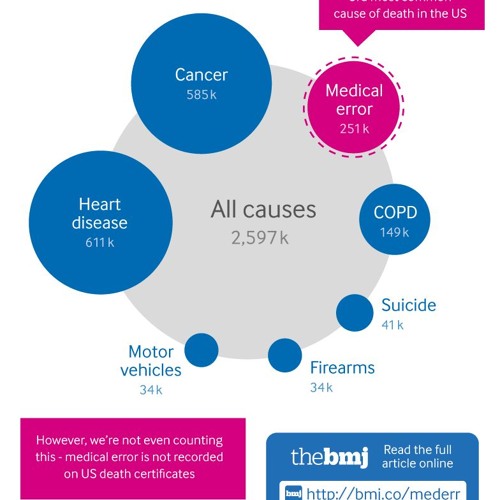
Medical error—the third leading cause of death in the US (and others)


Medical error

 Health priorities
We have estimated that medical error is the third biggest cause of death in the US and therefore requires greater attention. Medical error leading to patient death is under-recognized in many other countries, including the UK and Canada.20 21
 If medical error was a disease, it would rank as the third leading cause of death in the US


 https://i1.sndcdn.com/artworks-000161299505-h7jyil-t500x500.jpg

A network meta-analysis of the risk of immune-related renal toxicity in cancer patients treated with immune checkpoint inhibitors


Abstract

Background: We performed a network meta-analysis of the risk of immune-related renal toxicity associated with immune checkpoint inhibitors.  
Methods: Eligible studies included randomized trials of patients with immune checkpoint inhibitors; describing events of immune-related renal toxicity.  
Results: Compared with chemotherapy control, immune checkpoint inhibitors carry a higher risk of all-grade (but not high-grade) immune-related renal toxicity. The risk with both nivolumab/ipilimumab combination was higher than the risk with either ipilimumab or nivolumab alone (odds ratio: 0.47 [95% credible interval: 0.21–0.99] and 0.11 [95% credible interval: 0.03–0.29]); for nivolumab/ipilimumab combination versus ipilimumab or nivolumab monotherapy).  
Conclusion: Our meta-analysis demonstrated that the use of immune checkpoint inhibitors is associated with an increased risk of all-grade immune-related renal toxicity compared with chemotherapy control.

Diagnostic Performance of Whole-Body PET/MRI for Detecting Malignancies


open access
Research Article

Diagnostic Performance of Whole-Body PET/MRI for Detecting Malignancies in Cancer Patients: A Meta-Analysis

 ....Conventional imaging procedures, such as chest radiography, CT, and ultrasonography, are commonly used to detect malignant lesions and assess tumor staging. However, based only on the morphologic criteria, it is difficult to identify small lesions and to distinguish potential metastatic lesions from benign findings [2]. The integrated 18F-fluorodeoxyglucose positron emission tomography (FDG PET)/computed tomography (CT), which combines morphological and functional information, is helpful in tumor staging and is currently a major diagnostic tool in oncology [3,4]. Because it provides a higher level of accuracy in TNM staging than does either PET or CT alone, PET/CT is considered indispensable [5]. Magnetic resonance imaging (MRI), which has excellent soft-tissue contrast compared to CT, can improve tumor detection and delineation in body regions with difficult anatomy, such as the head and neck areas and gynecological regions.....

Scientists double number of known genetic risk factors for endometrial cancer (European ancestry)


Science news

"In this study we have identified another five regions, bringing the total to nine. This finding doubles the number of known risk regions, and therefore makes an important contribution to our knowledge of the genetic drivers of endometrial cancer.
"Interestingly, several of the gene regions we identified in the study were already known to contribute to the risk of other common cancers such as ovarian and prostate.

 The study was an international collaboration involving researchers from Australia, the United Kingdom, German, Belgium, Norway, Sweden, the United States and China. The UK part of the study received funding from the charity Cancer Research UK.
Journal Reference:
  1. Five endometrial cancer risk loci identified through genome-wide association analysis. Nature Genetics, 2016; DOI: 10.1038/ng.35

ovarian cancer - 50 most recent articles (indexed by 'ovarian cancer' and date)


Blogger's Note: this is a quick search (not fail safe)

NCBI

Search results

Items: 1 to 50

1.
Cohen Y, Dafni H, Avni R, Fellus L, Bochner F, Rotkopf R, Raz T, Benjamin LE, Walsh K, Neeman M.
Biol Reprod. 2016 Dec;94(1):14. doi: 10.1095/biolreprod.115.131987. Epub 2015 Oct 21.
2.
Sedláková I, Laco J, Tošner J, Špaček J.
Ceska Gynekol. 2016 Dec;80(6):405-13. Czech.
PMID:
26741154
3.
Cavalieri EL, Rogan EG.
Clin Transl Med. 2016 Dec;5(1):12. doi: 10.1186/s40169-016-0088-3. Epub 2016 Mar 15. Review.
4.
Accardo A, Galli F, Mansi R, Del Pozzo L, Aurilio M, Morisco A, Ringhieri P, Signore A, Morelli G, Aloj L.
EJNMMI Res. 2016 Dec;6(1):17. doi: 10.1186/s13550-016-0175-x. Epub 2016 Feb 20.
5.
Takase Y, Tomizawa N, Enokida Y, Shiraishi T, Katoh R, Suto Y, Sato H, Muroya K, Kurosaki R, Kobayashi K, Arakawa K, Ando T, Takesyohi I.
Surg Case Rep. 2016 Dec;2(1):26. doi: 10.1186/s40792-016-0150-9. Epub 2016 Mar 14.
6.
Ying J, Wang J, Ji H, Lin C, Pan R, Zhou L, Song Y, Zhang E, Ren P, Chen J, Liu Q, Xu T, Yi H, Li J, Bao Q, Hu Y, Li P.
Gene. 2016 Jul 1;585(1):58-64. doi: 10.1016/j.gene.2016.03.023. Epub 2016 Mar 17.
PMID:
26995654
7.
Hill EM.
Psychol Health Med. 2016 Jul;21(5):551-61. doi: 10.1080/13548506.2015.1109674. Epub 2015 Nov 7.
PMID:
26549407
8.

Ovarian Cancer and Us (blog) link: encrypted connection https://ovariancancerandus.blogspot.com.


https://ovariancancerandus.blogspot.com

feed:
http://ovariancancerandus.blogspot.com/feeds/posts/default

10th International Symposium Advanced Ovarian Cancer (meeting programme


OncologyPRO
 Oncology Meeting Resources
  Valencia, Spain 

The 10th edition of this symposium, organised by ESMO and GEICO was the ideal environment to discuss both new and standard approaches to the treatment and management of ovarian cancer.

On this page, you may view the slides of presentations given at the 10th International Symposium Advanced Ovarian Cancer to the extent the presenters have consented to release their contribution or a slightly modified version thereof.

Please note that the publication of these presentations is a courtesy of the originating authors and is for personal educational purposes only.

Useful links

Tuesday, May 03, 2016

new open access journal: A new forum for research on research integrity and peer review


Research Integrity and Peer Review | Full Text

New paradigms for BRCA1/BRCA2 testing in women with ovarian cancer – UK (GTEOC study)


(GTEOC) Study

(mini review) Reducing overtreatment in gyn oncology: the case for less in endometrial and ovarian cancer


Frontiers | open access (provisional pdf)

Division of Cancer Prevention, National Cancer Institute, USA, Gynecologic Oncology, Johns Hopkins School of Medicine, USA, Gynecologic Oncology, Rush University, USA

included:
 Table 1 – The Society for Gynecologic Oncology Choosing Wisely [8] (CA125....)


IDH1 mutated low grade astrocytoma occurring in MSH2 mutated Lynch syndrome family


open access

1. Introduction

Lynch syndrome (LS), previously known as hereditary nonpolyposis colorectal carcinoma, is an autosomal dominant tumour predisposition syndrome. It is caused by a germline mutation in one of the following DNA MMR genes: MLH1 (MutL homologue 1), MSH2 (MutS homologue 2), MSH6 (MutS homologue 6), or PMS2 (Postmeiotic segregation 2). Patients with a pathogenic DNA MMR gene mutation have a 10–50% risk for developing colorectal carcinoma at an early age (mean 45–50 years) and extracolonic malignancies can occur including endometrial, ovarian, hepatic, pancreatic and ureteric carcinomas and brain tumours [1] and [2].Although the 1–3% lifetime risk of brain tumours is low compared to other extracolonic tumours in LS families [1], this risk is 6 fold that of the general population and its occurrence has been termed Turcot Syndrome. The brain tumours previously described in Lynch/Turcot syndrome have mostly been high grade gliomas, predominantly glioblastomas, and less commonly, medulloblastomas [1], [3], [4], [5] and [6].A recent European study described the risk of developing brain tumours being highest (2.5%) in Lynch syndrome patients with MSH2 mutations, contained the first description of low grade astrocytoma in Lynch syndrome....

5. Conclusion

Brain tumours reported in Lynch syndrome families have predominantly been glioblastoma or medulloblastoma, and the present case expands this spectrum to include mIDH1 (R132H) mutated low grade astrocytoma.

Monday, May 02, 2016

Reply to Yap et al: re: Biopsy-Derived Biomarkers in Phase I Trials: Building Confidence in Drug Development


Reply to Yap et al

 ....The examples of poly (ADP-ribose) polymerase inhibitors are specifically mentioned in the correspondence.3 As noted in our original article, the maximum-tolerated dose, 400 mg twice daily, was subsequently used for further development.4 This dose and schedule were not based on the limited data from serial tumor biopsies (four patients at 200 to 400 mg, all with evidence of target inhibition) presented in that study. Notably, there was an apparent relationship between dose and response in BRCA-mutant patients with ovarian cancer, with greatest efficacy at the dose of 400 mg twice daily. Thus, the pharmacodynamic studies, although scientifically elegant, did not impact the choice of dose or the decision to advance the drug......

Related Article


REFERENCES

  1. 1.
  2. 2.

Drug Pricing Reform Even Big Pharma Might Like (U.S.)


Science and Enterprise

 2 May 2016.
At a press event in Washington, D.C. last week, Representative Lloyd Doggett of Texas, a champion of lower prescription drug prices, took aim at drug companies and their business practices. “An unaffordable drug is 100 percent ineffective,....

Patterns of care, predictors and outcomes of chemotherapy for ovarian carcinosarcoma: A National Cancer Database analysis


abstract

Highlights
Ovarian carcinosarcoma has worse prognosis compared to papillary serous histology.
The survival difference was noted across all FIGO stages.
Women with ovarian carcinosarcoma are less likely to receive chemotherapy.

Objective

The aim of this study is to determine if outcomes of patients with ovarian carcinosarcoma (OCS) differ from those of women with high-grade papillary serous ovarian carcinoma (HG-PSOC) when compared by stage and treatment modalities.

Improved outcomes with dose-dense paclitaxel-based neoadjuvant chemotherapy in advanced epithelial ovarian carcinoma


abstract

OBJECTIVE:

We compared tolerability, toxicity, response, and interval debulking surgery (IDS) outcomes between patients who received weekly dose-dense paclitaxel (DDP) and every three-week platinum to standard every three-week taxane plus platinum neoadjuvant chemotherapy (NACT) for advanced epithelial ovarian cancer (EOC).

METHODS:

We conducted a retrospective study of patients receiving NACT at our center between June 1, 2012 and July 31, 2015. Patients with stage III/IV EOC who received at least one cycle of DDP (weekly paclitaxel plus every three-week carboplatin) or standard taxane (every three-week paclitaxel or docetaxel plus carboplatin) therapy were included. Abstracted data included demographics, tolerability, grade 3/4 toxicity, response, and IDS outcomes. Fisher's exact and student t-test were used for statistical significance.

RESULTS:

Twenty-one patients received DDP and 40 received standard taxane. Tolerability was comparable. More patients receiving DDP experienced grade 3 or 4 toxicity when considered in aggregate (86% vs. 40%; p=0.001). Pathologic complete response (pCR) was achieved in 14% of DDP patients versus 3% of standard (p=0.11). 48% of patients in the DDP group were debulked to no residual disease (NRD) versus 28% in the standard group (p=0.16).

CONCLUSIONS:

While associated with an increase in severe toxicity compared to standard three-week taxane, DDP (weekly) appears to facilitate higher rates of pCR (Pathologic complete response) and NRD (no residual disease) for patients receiving NACT in this preliminary study. These results warrant further investigation of DDP for patients with advanced EOC and assessment of impact on long-term survival outcomes.